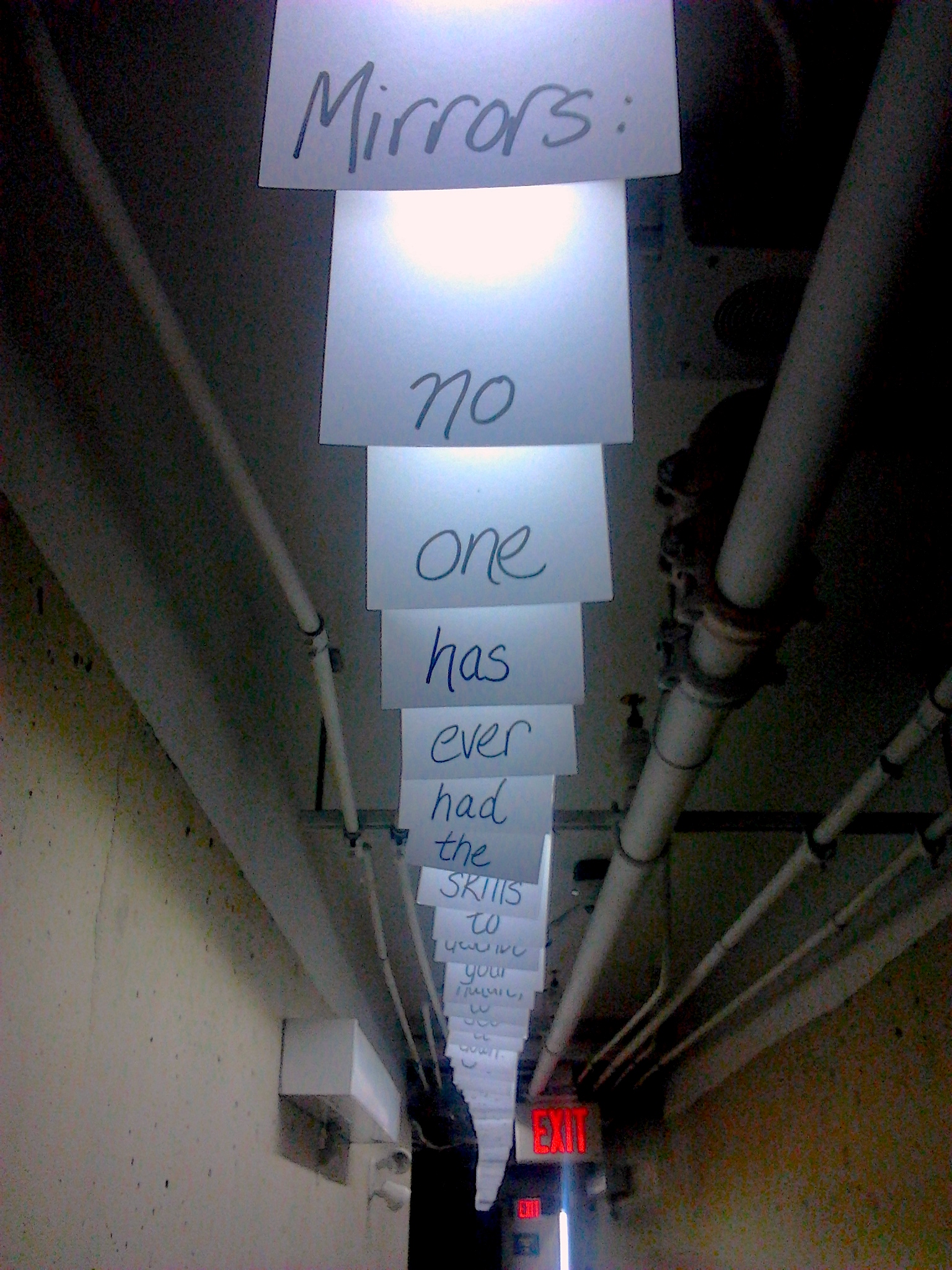
This morning I saw this in my Facebook feed:

Maggie Smith

Ahh, truer words were possibly ne’er spake, Maggie. But that said, I do see the attraction of looking back on a year before diving into the next — personally, I find it’s a great way to focus, reflect, and prepare for what’s ahead. Is it necessary to publicly post these reflections? Well, probably not…. but it does force me to organize and articulate my reflections in a way I wouldn’t if they were just a collection of stray thoughts dancing around in my balding, scatterbrained head. Those who know me know that this past year was by no means a perfect one, but amidst the chaos there were some things that happened that, professionally speaking at least, made 2014 a bit of a watershed. They’re presented here, for me more than anyone else, as a friendly-but-firm kick-in-the-arse as I spend that weird little week between Christmas and New Years gaily ignoring my To-Do Lists.

January 2014: Sins & Fantasies CD release

Alright, technically it was late, late December when these puppies arrived on my doorstep. But the satisfaction of completing a long-term project like this was still going strong in early January. Sins & Fantasies is my second solo album, featuring new works for solo flute by Canadian composers, each inspired by one of the Seven Deadly Sins (along with some Telemann fantasias for good measure). This album went on to receive a very generous review from the WholeNote, which can be read here.

Sins & Fantasies cover image

February/April 2014: Schoenberg, Stockhausen, & Top with the VSO

The opportunity to play as a member of the Vancouver Symphony Orchestra is always a thrill but the opportunity to play principal flute in their Annex contemporary music programmes is a rare (and, I’ll admit, occasionally terrifying) honour. Luckily, I had two such opportunities this year: in February I performed with the VSO in a programme including new and recent works by Edward Top, Brian Current, and Bramwell Tovey, alongside one of my favourite pieces of all time, the virtuosic, post-romantic Kammersymphonie Op. 9 by Arnold Schoenberg; and again in April, where the programme included Karlheinz Stockhausen’s monstrous Kontrapunkte — apparently the first time ever the VSO performed a piece by Stockhausen. The April performance also included music by Kurt Weill, Edward Top, and James Rolfe.
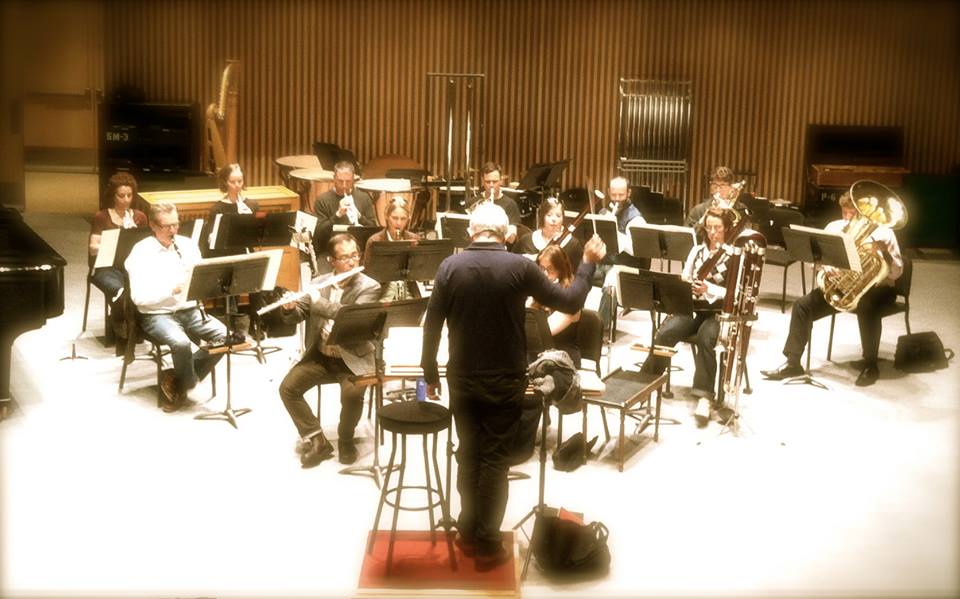
Performing with the VSO, Bramwell Tovey, conductor.
Rehearsing with the VSO, Bramwell Tovey, conductor. Photo by Edward Top.

March 2014: Fight of the Bumblebee with Kia Kadiri

March saw the release of one of the most unusual projects I’ve ever been a part of: a CBC video shoot with rap artist Kia Kadiri celebrating the 170th birthday of Rimsky Korsakov. The video, entitled “Fight of the Bumblebee” stages a rather cheeky showdown between flutist and rapper. It was an invitation that initially terrified me — until I had the chance to meet Kadiri and realize what a focussed and professional artist she is. She was a joy to work with and the video shoot was a a tonne of fun. Oddly, one of the highlights of that afternoon came from the makeup artist: before the video shoot, she sat me down, studied my complexion and asked what colour of foundation I usually take. When I stared back at her blankly, she put a hand to her face and whispered, “Oh my God… A virgin.”

March 2014: Aventa Tour to New York, Seattle, Ottawa, and Regina

I’ve said it so many times now I sound like a broken record, but I’ll say it once again: more often than not the Aventa Ensemble seems more like a second family than a job. Our tours are always incredible experiences but this year’s was particularly special, featuring Norwegian composer Rolf Wallin‘s Strange News with the Ugandan actor Arthur Okman Kisenyi. Strange News is a powerful work about the atrocious use of child soldiers in African conflicts, as narrated by Kisenyi. In keeping with all things strange, the tour also included Strange Matter, my first introduction to the music of Canadian composer Zosha di Castri.
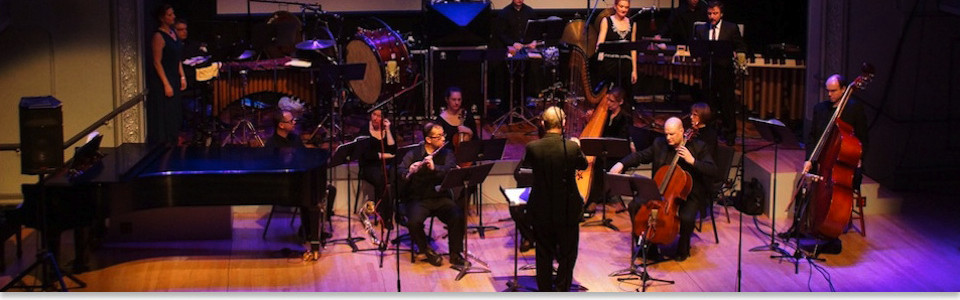
Aventa Ensemble performing at Roulette in Brooklyn.

June 2014: Recording Gordon Fitzell’s Magister Ludi with ECM+ in Montreal

In early June I headed out to Montreal to be a part of the ECM+ flute ensemble, directed by Véronique Lacroix. We recorded Winnipeg based composer Gordon Fitzell’s  Magister Ludi for eight flutes and cello for the Centrediscs label. That week I got to experience the incredible rarity of taking a single piece of music and spending nearly a week prying it apart, getting inside it, and truly understanding the nuances and subtleties of not only my own part but each of the other eight parts. I came away with Gordon’s ethereal soundworld ringing through my ears for weeks afterward.

Véronique Lacroix directing the flute ensemble of the ECM+ for the recording of Fitzell's Magister Ludi.
Véronique Lacroix directing the flute ensemble of the ECM+ for the recording of Fitzell’s Magister Ludi. Photo by Gordon Fitzell.

AND they used my artwork for the CD cover! How cool is that?

Cover art for Magister Ludi

July 2014: The Orpheus Project

Since it was founded by Dave Pay in 2006, Music on Main has been consistently bringing some of the most interesting concert ideas to life in Vancouver. But this summer they outdid themselves with The Orpheus Project: an immersive event that opened up the entire Cultch Theatre to the audience and transformed it into a surreal playground of music and myth. The music — much of it especially composed for this event — was sometimes ecstatic, sometimes nostalgic, sometimes almost unbearably dark, and sometimes plain old demented, but it was all luminously beautiful and the sounds and images continue to haunt me. Read more about the Orpheus Project here.

Performing "recurrerre" by James B. Maxwell in the cellar of the Cultch. Photo by Jan Gates.
Performing “recurrerre” by James B. Maxwell in the cellar of the Cultch. Photo by Jan Gates.

August 2014: Recording Ouijist by Nicole Lizée

The summer of 2014 included another recording project of an incredible piece of music: Ouijist by the Montreal composer Nicole Lizée. This was a piece that I commissioned from Nicky in 2012 which was presented by The Little Chamber Music Series That Could as part of the All Souls celebrations at Mountainview Cemetery in Vancouver. Soon after, Nicole decided to include the piece as part of her new Centrediscs album, Bookburners, so violinist Rebecca Whitling, double bassist Mark Haney, and I were joined once again by Montreal percussionist Ben Reimer and Lizée for two days of intense rehearsing and recording at Pyatt Hall. Excerpts from Lizée’s chilling and introspective work can be heard below:

October 2014: In an Autumn Garden

This was absolutely one of the year’s highlights for me, as it was a project that I was immersed in from the very beginning to the very end: the initial idea was to present a concert of new works inspired by Japanese gagaku (Imperial court music) for the Chrysanthemums and Maple Leaves Festival, presented by the Vancouver Intercultural Orchestra. This event initially began as a straightforward Tempest Flute Ensemble concert, but like many arts projects, it grew as it gestated: we were joined by Naomi Sato, sho virtuoso, from Amsterdam; Jeffrey Stonehouse, flutist from Montreal; conductor Edward Top; percussionists Jonathan Bernard, Martin Fisk, and Brian Nesselroad; and even Tiresias Duo, my 10-year + partnership with pianist Rachel Iwaasa joined the fray. The programme featured premiers by Brian Harman, James Beckwith Maxwell, and Hiroki Tsurumoto and concluded with Toru Takemitsu‘s gagaku masterpiece, In an Autumn Garden, arranged for our combined forces.
An excerpt of Maxwell’s new flute and piano piece, ruduo, can be heard below:

November 2014: Onyx Trio at Open Space

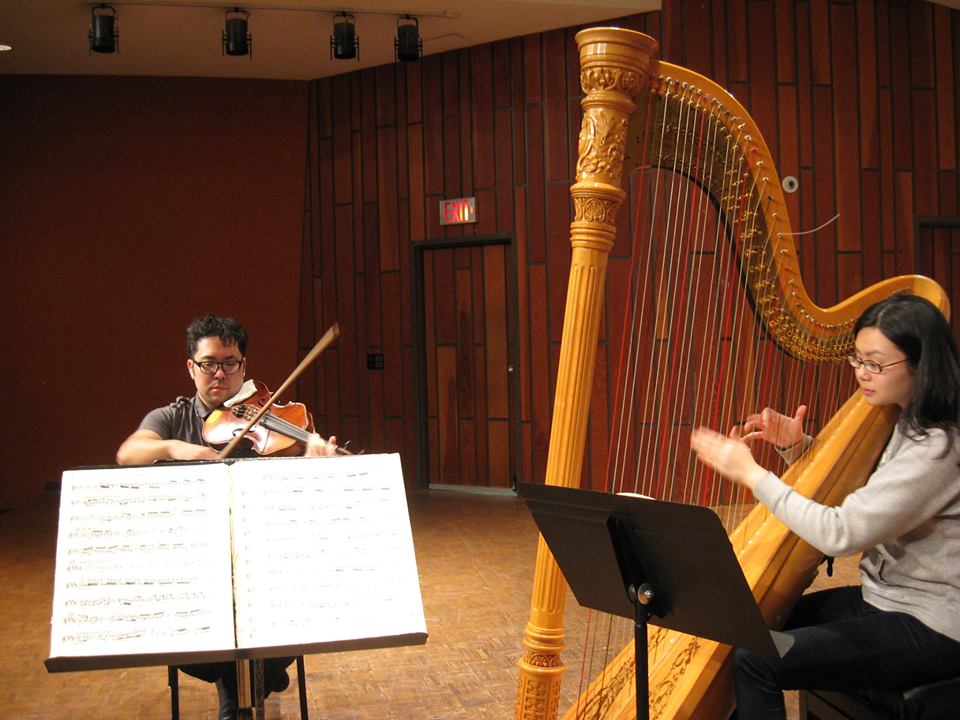
I have to say, October and November were a couple of the craziest months on record for me. They were full of fascinating projects that I was delighted to be a part of but, like Bilbo Baggins, by the end of it I was starting to feel like a pat of butter being scraped across way too much bread. Still, they were a couple of months I wouldn’t change for all the world. Among the many performances in November, the Onyx Trio (my trio with harpist Joy Yeh and violist Marcus Takizawa) had their first full-length concert in Victoria. Presented by Open Space and the Blue Moss Ensemble, Onyx performed new works by Blue Moss founders Anna Höstman, Emilie LeBel, and Mitch Renaud, along with a special commission by Vancouver/Sunshine Coast composer Giorgio Magnanensi and a short (but deadly!) work by Giorgio’s former mentor, the Italian composer Franco Donatoni.

Onyx Trio performing at Open Space in Victoria BC

It was a thrill to immerse ourselves in such incredibly diverse and original works, and I think it’s safe to say we emerged from the experience sounding tighter than ever — just in time for our college shows in January and February, which will feature works by Gubaidulina, Takemitsu, and Debussy. Our premiere performances of Anna Höstman’s Lehtiä and Giorgio Magnanensi’s Introduzione and Tableaux (complete with electronics) can be heard below:

Well, I’m happy to report that I think this post has done exactly what it was meant to do: frighten me enough to get my arse away from the computer and back in the practise studio (aka: my living room). Happy New Year to anyone who finds themselves this far down the page!
IMG_6743-correction
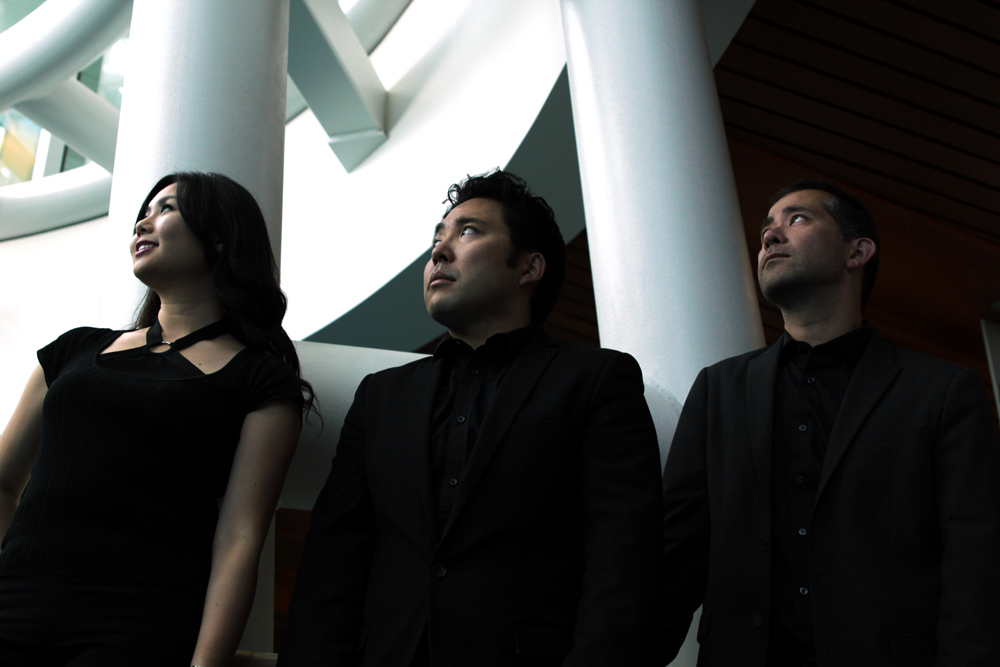
Onyx Trio: Joy Yeh (harp), Marcus Takizawa (viola), and Mark Takeshi McGregor (flute)

I’ve long since learned not to complain about the weather to the rest of Canada when one lives in Vancouver — especially as we approach winter. So instead of using this post to tell you how my banana tree finally experienced the indignity of being moved indoors this week (he’s much happier now, by the way), I’ll take this time to talk about some of the wonderful music events that are taking place this month, both in Vancouver and Victoria.

I’ve posted a few times now about the Onyx Trio, my new chamber group with Marcus Takizawa (viola) and Joy Yeh (harp). These past couple weeks we’ve been armpit-deep in preparations for what certainly has to be our most ambitious project yet: a concert in Victoria presented by Open Space and the Blue Moss Ensemble. Taking place this Saturday at 7pm at Open Space (510 Fort Street, 2nd floor, Victoria), we’ll be presenting a programme of new works, mostly written especially for us, by Victoria composer Mitch Renaud, Toronto composers Anna Höstman and Emilie LeBel, Vancouver New Music Artistic Director Giorgio Magnanensi, and an older work (if 1996 counts as “older” in the world of classical music) by Giorgio’s mentor, the Italian modernist Franco Donatoni. Random facts you may or may not know about these composers: 1.) Anna and I go back as far as 2007/08, when I premiered her flute concerto, Trace the Gold Sun, with the Victoria Symphony; 2.) Giorgio’s new piece, written for Onyx, features an electronic soundscape that makes us feel like we’re trapped on the spaceship Nostromo shortly following its encounter with planetoid LV-426 (but only in the most awesome ways possible); 3.) Franco Donatoni’s Small II is virtuosic, visceral, and exploits the colours of the three instruments in ways I’ve never heard. Also, the handwritten score and parts bring new depth to the term “chicken-scratch” — seriously, we’re talking about the penmanship of a serial killer after six cups of coffee. For more information about this audacious concert, visit Open Space’s website by clicking HERE.

This past weekend I teamed up with cellist Marina Hasselberg, bassist Mark Haney, and pianist Corey Hamm to form the newest incarnation of the NOVO Ensemble for the first of two performances of LUX. This concert, featuring music by Jordan Nobles, James Maxwell, Nico Gonzales Thomas, Michael Oesterle, Luc Martin, and Owen Underhill, played to an enthusiastic audience at the Pyatt Recital Hall at the VSO School of Music. On Sunday, November 23 I’ll be rushing back from the Island to repeat this concert at St. Philip’s Anglican Church (3737 27 Ave W, Vancouver) at 4pm. Click HERE for more details. And if you’re the type that enjoys visual stimuli, I invite you to get a gander at these lovely shots from our Pyatt Hall concert, courtesy of Carol Carson.

Finally, the month ends with another trip out to Victoria, BC to make music with my “second family”, the Aventa Ensemble. We’ll be presenting our first concert of the season, entitled Schnee, on Sunday, November 30 at  8:00pm, at the Phillip T. Young Recital at the University of Victoria. This concert features the Canadian premiere of the Danish composer Hans Abrahamsen‘s Schnee, as well as La Chambre des cartes by Tristan Murail and two recent works by Giorgio Magnanensi. In addition to their love of all things Canadian, Aventa directors Bill and Darnell Linwood have been staunch supporters of new Danish music — a passion that has resulted in two tours to Denmark and even the opportunity for me to premiere Anders Nordentoft’s solo flute piece, Turmalin, in New York City back in  2009. Schnee continues Aventa’s exploration of the music of this amazing country — and, if the title of Abrahamsen’s piece is any indication, provides evidence that the Danes are far more comfortable glamourizing cold weather than your average West Coast Canadian.

Aventa
Aventa Ensemble. Bill Linwood, director.


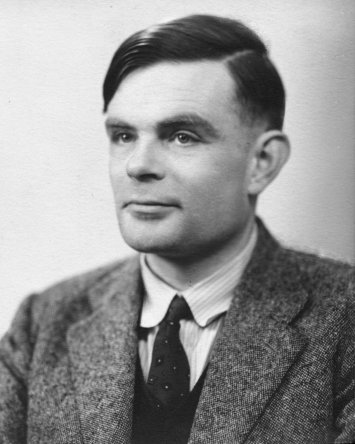
Alan_Turing_photo

Alan Turing rode his bicycle,

He rode his bicycle to work.

He rode it to Bletchely Park.

Riding, the chain on his bicycle came off.

He rode his bicycle, counting — until the chain came off,

He rode his bicycle, counting.

Counting, he stopped the chain before it came off.

He fixed the chain.

Riding again, counting,

He rode his bicycle to Bletchley Park,

Counting.

– From the preface to Delilah for solo flute (2014) by Michael Oesterle

Music on Main‘s Modulus Festival kicked off a couple days ago and so far it’s been a fantastic few days. Tonight’s concert (October 28), entitled “machines think love“, pays tribute to a number of composers I love: George Crumb, Arnold Schoenberg, and Canadian composers Rodney Sharman and Michael Oesterle. This evening I’ll be giving the world premiere of Oesterle’s Delilah for solo flute. This piece — along with therefore for solo soprano, also making its debut tonight via the mindblowing voice of soprano Carla Huhtanen — is inspired by Alan Turing: a British mathematician, logician, and philosopher; a tormented homosexual; and father of the modern computer. The above poem recounts how this eccentric genius rode a dilapidated bicycle to work, counting how many times the wheels rotated, anticipating the moment before the chain fell off. He would stop the bicycle, one rotation before this happened, readjust the chain, and carry on. Numbers, patterns, and systems were of incredible importance to Turing — so much so that he would use them to find new ways of understanding humanity and human intelligence. “Delilah” was the name of a “speech system” Turing designed in 1944 to scramble and descramble voice messages. As Oesterle notes, Delilah “was so far ahead of its time that it resembles the way we currently store music in digital format.” Oesterle’s flute piece is a tour-de-force, perfectly balancing the constantly evolving, Turing-like patterns with a playful, elegant charm. Nevertheless, the arresting sense of joy in Oesterle’s Delilah is undermined by the horrific means of Turing’s demise: prosecuted for his homosexuality by the very country he helped save in World War II, he was chemically castrated and committed suicide shortly after. Delilah, for all its ebullience, possesses an undercurrent of heartbreaking injustice.

Machines think love also features the incredible talents pianist Rachel Iwaasa, Rebecca Wenham, Tawnya Popoff, and the Cecilia String Quartet. Concert begins at 7pm, (note early start time), October 28th at Heritage Hall (3102 Main Street), Vancouver.

Why am I posting about a trombone CD, you ask? Well, this is a very special trombone CD, for a number of reasons. First of all, this is the first solo release by my very dear friend and trombone virtuoso, Neal Bennett, which focusses on new (and to a large extent, Canadian) works for trombone. But it wasn’t enough for Neal to make a plain old trombone CD; four of the seven works presented here are scored for anywhere between eight and ten trombones. And Neal, being the overachiever that he is, recorded all the bloody parts. All in all, it was a gargantuan amount of work for Neal and the end result is fabulous: recorded here are four works for trombone ensemble by Canadian composers Scott Good, Roydon Tse, Jocelyn Morlock, and Farshid Samandari (whose work for eight trombones and bass drum, Ziggurat, inspired the name of the album). Stealthily slid in between these tracks are solo trombone pieces by Morlock, Rob McKenzie, and Swedish composer Folke Rabe. Finally, Ziggurat marks the second time I’ve sat in the producer’s chair for someone else’s CD recording (the first being for pianist Rachel Iwaasa‘s Western Canadian Music Award nominated album, Cosmophony). Being a producer for a multi-track classical album can be an anxiety-inducing task, but Neal and I were surrounded by tremendous help through all stages: Brian Nesselroad adding some percussive magic on Morlock’s Sequoia and Samandari’s Ziggurat; recording and editing by Ryan Noakes and Brian Garbet; Don Harder on mastering; graphic design by Simon Butler; and beautiful artwork by Vancouver painter Kevin Snyder.

Ziggurat is released on the Redshift Record label (and is, in fact, the thirteenth release for the label!) and will be available soon through the Canadian Music Centre and iTunes.

Check out the excerpt from Ziggurat below: Morlock’s Sequoia for eight trombones and percussion — it gives you an idea of the incredibly beautiful music on this album and the cuh-razy amount of work Neal put in to this whole project!

Ziggurat: the final product.

Performing "recurrerre" by James B. Maxwell in the cellar of the Cultch. Photo by Jan Gates.
Performing “recurrere” by James B. Maxwell in the cellar of the Cultch. Photo by Jan Gates.

It’s usually my intention to blog about concerts and events before they occur so that anyone interested would have a chance to go. Alas, that didn’t quite happen with the Orpheus Project, Music on Main’s monster project at the Cultch, which ran from July 17 – 20. Real life (specifically a stint of work in Toronto, immediately followed by moving apartments, prepping for a music appreciation course, and, finally, saying farewell to my dear old pet newt, Smokey) conspired to make an already busy month even more hectic. But now, two weeks later, I’m still haunted by the Orpheus Project: I find myself daydreaming about it, playing over images and sounds in my head… I’ve even been dreaming about it. So today I’m going to reflect on what was one of the most ambitious, daring, and satisfying music events I’ve ever been involved in.

The Orpheus Project was an immersive event that opened up the entire Cultch Theatre to the audience and transformed it into a surreal playground of myth and music. Inspired by the many tellings and retellings of the Orpheus legend — his loss of Eurydice, his decent into the Underworld, and his ultimate grisly demise — the audience is divided into groups, each one taken on a unique journey throughout the theatre, from the main stage, to the catacombs beneath, even to a creepy shower stall at the top of the building. Over the course of the evening, they piece together their own account of Orpheus’ plight — a life full of love, loss, heroism, doubt, violence, and of course, music. New works were written especially for this event by Veda Hille, James Beckwith Maxwell, Cassandra Miller, Jocelyn Morlock, and Alfredo Santa Ana. These new commissions were placed alongside pre-existing interpretations of the Orpheus myth, including those by Monteverdi, Stravinsky, Cocteau, Andriessen, Handel, and Truax — though no single audience member could hear all the works in a single evening (inspiring some listeners to go a second night and follow a different group). Everyone came away from the Orpheus Project with a different narrative, a different interpretation.

Instead of sitting still for 90 minutes in a theatre and witnessing a musical narrative unfold before them, the audience is sent off to discover the story themselves. Each group follows a unique path, stumbling across events that gradually, over the course of the evening, form a bizarre mosaic of the Orpheus legend: some of these events are musical performances; others are ominous meetings with oracles (who were, in fact, composers Cassandra Miller and Jocelyn Morlock, and poet Colin Browne).

For me, the cellar was the most exciting part of the Orpheus Project — the deepest level of the Cultch was only visited by two of the five groups, giving it a slightly exclusive feel. But there was also this idea of stumbling upon the darkest corners of the Orpheus myth: cellars are dark, sunless places full of secrets and regrets, and I think a beautiful job was done creating a deliciously unsettling atmosphere here. Flutist Laura Barron and I performed a duet by James Maxwell that was cunningly coordinated to clips from a Cocteau film in a room full of mirrors and candles, while down the hall Cassandra Miller presided over the unsuspecting with wordless benedictions — and provided a glimpse into their future through scraps of music retrieved from boxes placed before them.


Some of the most exciting parts of the Orpheus Project took place when the audience wasn’t even there. Many times, Laura and I would calmly finish a piece and wait patiently until the last person had left the room… and instantly bolt out another stairwell to ensure we were in place for the next group about to arrive in another part of the theatre. In fact, the Project had an interesting way of creating comradery with the performers involved (which, it should be mentioned, included the outstanding soprano Carla Huhtanen, baritone Steve Maddock, violist Matt Davies, cellist Rebecca Wenham, pianist/harpsichordist Christopher Bagan, singer/pianist Veda Hille, and actor Patti Allan); as musicians, we aren’t often asked to contribute “physically” to an event. Everything we did before the audience — whether it was playing, or moving from one part of the stage to another, or simply picking up the instrument — had an incredible sense of purpose to it, and it made every musician more committed to the task at hand. As a result, throughout the run there was a unique sense of bonding, of contributing to a greater whole. It was unforgettable, really.

The full ensemble performing the finale by Alfredo Santa Ana/G.F. Handel.
The full ensemble performing the finale by Alfredo Santa Ana/G.F. Handel. Photo by Jan Gates.

Enjoy the photos that are attached here — photos are, of course, only photos (though the ones by Jan Gates are exceptionally beautiful) and can never give you an accurate idea of the beautiful and chilling soundworld that accompanies them. So here’s hoping the Orpheus Project sees the light of day sometime soon!

Onyx is a banded variety of chalcedony. The colours of its bands range from white to almost every colour (save some shades, such as purple or blue). Commonly, specimens of onyx contain bands of black and/or white. — Wikipedia.org

Also, it should be added that as of today, June 21st 2014 — Summer Solstice to be precise — Onyx is the name of a new trio of musicians, specifically harpist Joy Yeh, violist Marcus Takizawa, and myself on the flute. Here, can you tell which one is us?


IMG_6743-correction

(I’ll give you a hint: it’s the photo taken by the incredibly gifted Nimus Dilasso one afternoon out at the Vancouver International Airport.)

So today, on the brightest, longest day of the year, one of the darkest stones will be making music in public for the very first time — in mere hours, we’ll be performing some glorious music by Claude Debussy, Maurice Ravel (cunningly arranged by Jocelyn Morlock) and Arnold Bax at the Surrey City Centre Library as part of Music on Main’s Surrey Sounds. Come check us out — or wait for our upcoming season which will include many more performances throughout BC! In the meantime, the Onyx Trio will hold court at its very own website, www.onyxtrio.com, designed by our very own Marcus Takizawa.

Sins & Fantasies cover image

I suppose if one is going to shamelessly horn-toot, a personal blog would be one of the very few places where such an indulgence might be considered socially acceptable (God, what did the boastful introvert do before the internet?). My latest album, Sins & Fantasies, which features seven new works by Canadian composers, each inspired by one of the Seven Deadly Sins, received a wonderful review by Alison Melville in the most recent edition of WholeNote Magazine. Melville writes:

What a brilliant conceit – seven pieces, each by a different living Canadian composer, and inspired by the Seven Deadly Sins. Beginning in 2010, Vancouver-based flute virtuoso Mark Takeshi McGregor gave life to this project, and the results are gloriously presented here. The disc begins with Dorothy Chang’s Wrath, a hissing, spitting and raging exploration of tone, breath and vocal sound, followed by Gregory Lee Newsome’s Avarice and Owen Underhill’s Three Reflections on Pride which employ flute, piccolo and alto flute. Jocelyn Morlock’s take on lust makes exquisitely erotic use of the alto flute, McGregor’s voice, and words from a 20th-century icon which completely spooked me out. James Beckwith Maxwell’s Invidere (envy) wanders into the far reaches of extended techniques, and Benton Roark’s Untitled gives a meditative and melancholy spin to sloth.

In all these, McGregor’s remarkable gifts as a player are mesmerizing. Besides his extraordinary technical mastery, his is playing of the most imaginative and creative kind. And to top it off, the disc closes with McGregor’s own Le dernier repas de M. Creosote, inspired by the infamous Monty Python character and an absolute tour de force any way you slice it. … As Chaucer says in The Parson’s Tale, the deadly sins “all run on one Leash, but in diverse manners,” and here their diversity is astonishing, inspiring, and only dangerous in the best possible way.

The entire review is available online HERE. Needless to say, I’m over the moon about this review — and I’m particularly thrilled that these outstanding works are getting the national spotlight they so intensely deserve. Dorothy Chang, Gregory Lee Newsome, Owen Underhill, Jocelyn Morlock, James Beckwith Maxwell, and Benton Roark: I can’t thank you enough for contributing such savage, weird, colourful, erotic, virtuosic, and introspective music.

Sins & Fantasies is now available through the Canadian Music Centre and on iTunes.


Last week I headed off to the Banff Centre to work with Toronto composer Gregory Lee Newsome for a few days at the Leighton Artists’ Colony. Many of us know the Banff Centre as one of the world’s great oases for artists, providing support, resources, solitude, and time to focus on special projects. (I’ve always thought of it as a real-life Rivendell from Lord of the Rings — but without all those Elves. Or wizards. Or Nazgûl circling the perimeter. Alright, forget it, it’s nothing like Rivendell.) The Leighton Colony is part of the Banff Centre, but slightly removed from the rest of campus in order to give writers, visual artists, and musicians that extra little bit of space, and it was here that Greg and I mapped out the beginnings of his new piece for alto flute and electronics — a special commission by the Toronto philanthropist Daniel Cooper. Daniel has helped create a number of solo pieces over the last few years including a solo viola piece by Cassandra Miller (written for Pemi Paull), a solo percussion piece by Michael Oesterle (written for David Schotzko), and a solo cello piece by Andrew Staniland (premiered by Frances-Marie Uitti). For five days Greg and I explored the traditional and extended soundworlds of the alto flute — the deeper, huskier cousin of the traditional concert flute (also affectionately known as the “Lauren Bacall of the flute family”). The gallery above shows some of the Colony grounds and studios — and provides sobering proof that, while we Vancouverites are being inundated with pink and white cherry blossoms, the rest of Canada is still pretty frickin’ cold in April.

bumblebee2_0313095903377_16x9_620x350

Back in December 2013 CBC producer Denise Ball asked if I’d be available to participate in an unusual little project: she wanted to pair me with a rap artist in a “music duel” video. The words “Flight of the Bumblebee” were mentioned. Along with “green screen”. And “director from Toronto”.

I have to admit, my initial reaction was pure, raw fear. I had never been in a video before. I had definitely never worked with a rap artist before. And, weird as it may sound, virtuosic showpieces like Rimsky-Korsakov’s famous little gem are the sort of repertoire I’ve spent most of my adult life avoiding — not because I don’t think they’re fun, but rather because I’ve never really seen myself as a “virtuosic” player. Flight of the Bumblebee is a blatant showcase of those aspects of instrumental playing (flying fingers, machine-gun articulation) that I perhaps feel the least comfortable with.

All that said, curiosity quickly overcame trepidation. I wanted to meet this person they were to pair me with: hip hop artist Kia Kadiri. We all met at CBC Vancouver: Kia and her beatmaster, Russ Klyne, along with Denise and fellow producer Jon Siddall. Kia presented her first draft of the “Bumblebee rap” — and it’s safe to say that the entire room was gobsmacked. “Rapid fire” doesn’t even begin capture the what she does. But what is perhaps most remarkable is that through all that vocal virtuosity, there is a core warmth, wit, and humour that is absolutely irresistible.

So I bloody well knuckled down and practised. And I added a few touches of my own (with a tip of the hat to iconic flutists Roland Kirk and Greg Patillo). The result is pure fun: in fact, the video shoot was a scream. Oddly, one of the highlights of that afternoon came from the makeup artist: before the video shoot, she sat me down, studied my complexion and asked what colour of foundation I usually take. When I stared back at her blankly, she put a hand to her face and whispered, “Oh my God… A virgin.”

Well, virgin no longer — bring on that foundation! To watch the video, click the link below.

My view from the office: Onyx Trio recording at the Vancouver Academy of Music. Marcus Takizawa (left) and Joy Yeh (right).

When a group of artists sets out to work together, there can be any number of complicating factors: will everyone share a common vision? Will there be an effective chemistry and comradery? Will there be an egalitarian division of labour? But when harpist Joy Yeh, violist Marcus Takizawa, and I convened to form a new trio last month, we didn’t seem to have any of these issues. We get along well, we all bring a diversity of strengths to the group, and we share a love for the music of the 20th and 21st centuries.

But for the love of all things good, we couldn’t come up with a name.

We wanted what all new enterprises want when name-hunting: something that’s catchy, appropriate, simple yet multi-layered. And we also thought it would be great to have a name that paid tribute to our Asian heritage (Joy is originally from Taiwan; Marcus and I are Canadian-born of Japanese backgrounds). Try as we might, there wasn’t anything that leaped out at us — searching for commonalities between Taiwan and Japan produced names that were (at best) difficult to pronounce by Western standards or (at worst) evocative of the rather bloody history between the two countries. Thankfully, it was the composer Jocelyn Morlock who came to the rescue with the name “Onyx”. Onyx is a gemstone formed in the gas cavities of lava. It can appear in many colours, but black is the colour that we most often associate with this stone — and thus very subtly alludes to our Asian heritage, in that we all have black hair (well, those of us who still have hair, or course). And, I gotta admit, it sounds great rolling off the tongue and it looks wonderful in print.

Thanks to Marcus’ skills as a recording engineer, the Onyx Trio recently recorded the second movement of Debussy’s remarkable Sonate pour flûte, alto et harpe as well as Takemitsu’s And Then I Knew ‘Twas Wind — both of which have been included here for your listening pleasure. Expect to hear more from us soon!

https://soundcloud.com/super-newt/claude-debussy